The Mobile World Congress (MWC) 2021 took place on Monday June 28 to Thursday, July 1 in Barcelona. Hailed as the world\’s biggest mobile event of the year, it was an exciting 4 days. Delegates attended from all over the world, both in person and virtually.
We wanted to know what happened and how important this year\’s event was for the industry in light of COVID as well as developments in technology.
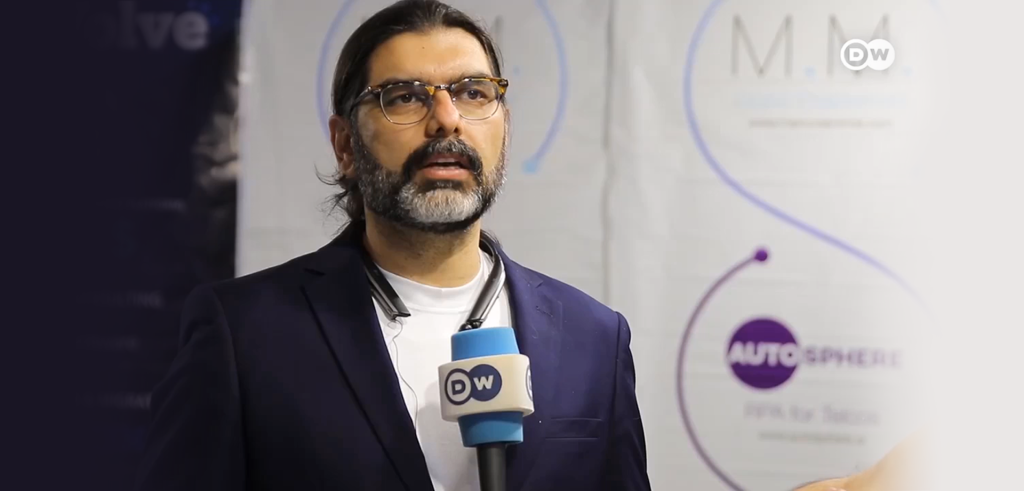
Taimur Khalid, CEO of Mercurial Minds (M.M) attended the full event, in person. M.M is always looking out for innovations and to be a step ahead. This is manifested in how quickly M.M has grown from its inception in 2013 to a company with global clients and offices in USA, UK, UAE and Asia.
We asked Taimur Khalid about his insights, thoughts and evaluation of MWC as well as broader issues related to technology and telco’s. His words will no doubt resonate and provide value for a wide audience, from start-ups to more established organisations.
We kicked off the interview by getting Taimur Khalid to set the scene for this year\’s MWC.
Considering the current Covid-19 situation we know that a lot of the big names and telcos decided not to attend the MWC (Mobile World Congress) in person. Some countries had internal restrictions and travel bans, so how do you find the event this year?
Yes, you are right. M.M. has been participating in the MWC consecutively for the past five years and this year the turnout was extremely low. Having said that, the delegates who did participate, we found them to be profoundly serious about contributing to the connectivity needs of the world in the post-pandemic situation.
The world over, we are witnessing a transformation in the methods businesses are serving their customers. In the education sector, teacher-student interaction is taking place online. In the healthcare sector, doctors are giving consultations to patients online. Governments are expediting whatever they can to online portals. Even business conferences are adopting hybrid models with a lot of online participation of delegates. All of this has been possible because of connectivity.
As customer behaviours are changing, we are witnessing a rapid convergence between technology and telco systems. ‘Mobile World Congress’ is the event of the year, for all who want to be a part of this ecosystem. So, even though the turnout was low, in the venue, we felt that the participants who did attend were serious about playing a role in contributing to the current digital needs of the end-users.
So, in short, I think that the event has been, in many ways, different from previous years but for us, I think it has been very promising.
This is interesting, as it was known that the attendance was going to be low, what was your company’s objective for this year? Were you at MWC to network, shop, or sell?
Yes, wonderful, this is a good question. I think in the previous year with the acceleration towards digitalisation that we have witnessed due to Covid19, M.M. saw two opportunities:
Firstly, Autosphere (RPA platform for telcos): With the telco business being one of the very few businesses that witnessed growth during the pandemic. The need to automate mundane tasks and reduce operating expenses along with improving turnaround times, we feel, should be the focus for telcos, hence we displayed our RPA platform called Autosphere.
We are already implementing RPA in certain Telcos and have seen some extremely exciting results. As Autosphere can contribute to the digitalisation drives of the telcos, we wanted to use MWC as a sort of event for Autosphere’s soft launch. So those are the two things we have launched, Autosphere, as a project and TWC, as a resource augmentation service.
Secondly, Resource Augmentation: M.M.’s telco and technology engineers were hired out to large international companies for short, medium and long-term projects, so we decided to form a business unit called The Workforce Company (TWC). This was one of the services we wanted to highlight in this year’s MWC.
M.M’s expertise and technological capabilities have already helped M.M. grow in a short span of seven years, and we have branched out. We have multiple offices from the US to Europe, in the Middle East and Pakistan. We are serving continents across the globe, and one of the reasons has been our technical capabilities. We are working with clients like Uber and Barclays Bank, so we felt that with the expertise that we have, we should try to help other organisations wherever possible.
So, where companies are trying to innovate or roll out a product at a really fast pace, rather than going through a hiring process and bringing people on board, they can just engage with our teams. Our teams are kind of like your ‘talent-on-hire\’, with the choice of short-term, medium-term, long-term contracts for your projects like OSS, BSS, GMLC or geofencing platforms. Another example, if you want to do some sort of video streaming apps, our technical teams are actually doing similar projects for some really big names globally right now as we speak.
You mentioned in your previous answer that this year was different; there was a lot more serious participation. Can you elaborate on that a bit more? What does that mean? How did you find this different with regards to your participation and your experience of the last few years and this year?
As I stated in the past few years we used to participate, it was primarily just to let our presence be known in the market and network. Our sales teams interacted with other sales teams, we would collect leads and share and exchange our contact details with people. Then throughout the year, we would just try to follow up those leads. This year was different. As I have said earlier that the participants who attended, knowing all about the pandemic, were looking at more than just networking and letting their presence be known. They were interested in forging collaboration.
So, to elaborate on this a bit more, anyone who understands digitalisation in its true sense understands that technology has been around for many years, data has been around for many years, and connectivity has been around for many years as well. It is all about the converging of all that together and using that for improved performance, improved servicing etc, now. So, this year we felt that within the low attendance the companies that were participating were really focused on collaborations. Gone are the days of client-vendor relationships. Today, the real leaders are embracing partnerships to innovate.
In short, what I am trying to say is that it seems to be that the environment is very conducive for small to midsize organizations like ourselves to get an opportunity on such platforms to partner with big names. A company that is serious about innovation and digitalisation, and does not want to be overtaken by disruptors has to be open to partnering with companies, small companies like ourselves. And we found that in this MWC there were a lot more conversations, a lot more interest where people were looking to partner and work together.
In your opinion, what was the main theme or message that this year\’s MWC advocated?
Digitalisation is a reality that no one can deny. The companies that are trying to transform and are going through “digital transformation” are those companies that have had the technology for many years, have had data for many years, have had systems and connectivity for many years, but they have never used this like the companies that were “digital native.” So, we do not see the likes of Google, Netflix or Amazon going through digital transformation. They were born digital; they are digital natives.
The companies that now have a huge reach, huge infrastructure, legacy business, and lots of data are the ones who really need to transform rapidly? I think that Covid has sped that up a lot more and what they need to do, if they want to not be eroded or they do not want to be the business that allows the disruptors to come and disrupt the business, they need to embrace the new and upcoming companies very quickly. Not just from an opportune perspective or for investment and acquiring them and then blending them in in their old legacy business models but really trying to learn from them and work with them in new ways.
So, the takeaway is that the telcos, if they don’t want to just become a dumb pipe providing connectivity but, if they want to deliver value to their end customers then they must embrace young aspiring companies and entrepreneurs and give them space to work with them.
What would be your message to young aspiring entrepreneurs? Especially that you are young and as you said in 7 years you have managed to build a company that is spanning over different regions and different areas?
This is a question I get asked quite often and it is a very pertinent question. I would be repeating what many other CEOs of companies have said and just me saying it again just reinforces that this is the fact.
Firstly, you need focus. We learnt this the hard way, burnt a lot of money, a lot of energy, wept tears of blood and sweat, we have had a lot of failure’s and one thing we realised is that rather than spreading ourselves thin, we should thin our focus. We were born in the telco space, and we evolved from just providing telco-based products to core telco networks and then based on that connectivity and data giving services, to peripheral industries. So, the first take home message is “stay focused.”
The second take home message, learn to ‘Fail Fast’. In 7 years, we have had multiple failures, but we never let those failures drain us or stop us.
And third take home message is ‘Be Open to Partnerships’. Do not take everyone as your competitor or adversary. Everyone brings with them unique learning and experiences, which help in moving at a fast pace.
In our meeting with Taimur Khalid, there was a great deal to take in and think about. The world is facing many new opportunities and challenges. It is evident that human potential is not lacking and also this is a time to re think. It is a time to plan and set out clear actions as we all move forward.
M.M is a leader in its field but is also proving to be a company that has a vision to take others along with it in its journey.
Today, the real leaders are embracing partnerships to innovate.
Taimur Khalid.