Chatbots have already evolved and taken on new names, such as; Conversational AI bot, AI Assistant, Virtual Assistant, Digital assistant, Conversational Agent, Virtual Agent, Conversational Interface and others. The evolution of names also shows how chatbots have adapted to serve different roles. In each role, they also need varying degrees of intelligence.
Chatbots initially found a comfortable place in customer service environments. But there is plenty of scope for this technology in many other environments. With customers expecting 24/7 assistance in all kinds of areas, from retail to banking, to health and so on, Chatbots will continue to serve businesses in the coming years. They are being developed and improved at a fast pace and prove to be cost-effective.
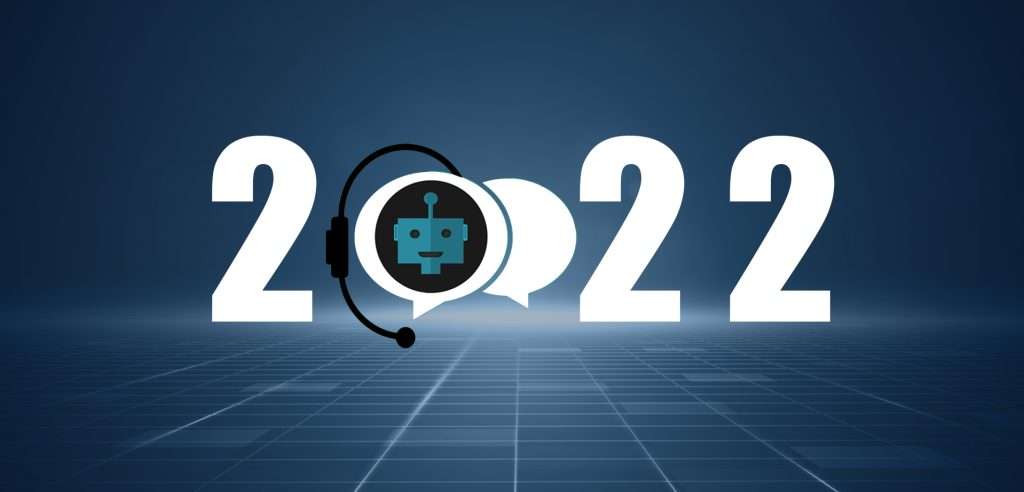
Since chatbots are here to stay and can serve businesses in their digital transformation journey, we should look at some top trends for chatbots in 2022.
Voice-activated bots
Gartner predicted that by 2022, 70% of people will be interacting with conversational platforms on a daily basis. And yes, it seems to be the case. Whether you know it or not, most of you have had an interaction with a bot.
The next big thing for bots will be voice activation. Rather than text-based chats, which are definitely popular and seem good enough, the use of voice-activated chats is the way ahead.
For Voice-activated Chatbots accuracy in speech recognition with regards to different languages and dialects still needs a lot of improvement. And this is the area that can be focused on to lead to better chat experiences in the future.
Voice chats are more convenient and more likely to take over from text-based chats. Most of us are already finding it better to use voice when interacting with Siri, Alexa and Google.
M.M has developed a chatbot that is already a generation ahead of normal chatbots. It is a conversational bot that is able to attend to customer needs in a regional language as well as English. So, beyond voice, another trend is, bilingual chatbots!
Transaction Chatbots
Chatbots started life in customer support. Now trust and ease of use have developed alongside the increased use of online banking. So bots have a bigger role to play in transactions.
Simple commands to a bot to, “Pay my Phone Bill”, “Top-up my account”, “Stop transaction” etc will have a direct impact on your business or personal transactions by influencing how you do banking.
Simple commands and guidance from a chatbot will save you and your customers time and money.
Transactional bots are focused and will only provide you with relevant queries and information. This means that the user experience is simplified and quick.
There are other ways transactional bots can save you time, aside from direct banking.
When you make purchases on a grocery app, you are most likely to repeat the same purchase.
Customers can make a purchase with this type of bot in a simple conversation. The bot can place the order and save customers time and unnecessary additional purchasing by focussing on buying what they usually buy.
For the business, easy purchasing helps to retain a customer base. Most of you will notice, in day to day spending, you do make the same purchases regularly.
Another example, if you want to search a new item. For example, when you want to buy a new phone, bots can do the hard work of looking into the best options based on your input. Once the search is presented the bot can also help you to make your purchase.
Emotional Intelligent Chatbots
Emotional Intelligence (EQ) is an indispensable skill. The workplace needs more EQ to function better. So, if your customers are interacting with a chatbot, then it makes sense to have Emotional Intelligent chatbots.
An EQ bot can recognize what you have typed and uses your language and punctuation to determine your mood.
Since companies are more likely to focus on soft skills in 2022, it makes sense that interaction with bots needs to also take into account the user experience and impact of this interaction.
By analyzing a conversation and getting feedback, bots can improve their EQ.
Another area that we will see changes in is that bots are expected to be more human-like and be able to show empathy when getting the job done.
Chatbot Analytics and Insights
Chatbots will keep a track of data such as what has been asked, what responses were provided and if a customer was satisfied or needed to be dealt with by an agent. This data is extremely useful.
These bots will assist you in really understanding your customer needs and thereby improve your business functions.
The assumption of time and money being saved can only be quantified when you know how well your bot is dealing with its work.
Businesses can look into funnels for different use cases. For example, you can see how many customers add a product to their cart but don\’t make it to the checkout. This can eventually help you to retarget these customers, find the reason for not completing the transaction and then convince them through deals and discounts to buy the product.
With chatbot analytics and insights, you can analyze the type of queries you get and the level of satisfaction. From this, you will be able to provide your customers with more personalized responses. This familiar feeling, of being taken care of, is a great experience for the customer.
Final Thoughts
Intelligent chatbots are widely being adopted across all types of companies. Since their birth, with innovative but simple use, chatbots have evolved. You can rely on these chatbots now more than ever.
In the years ahead, we can confidently say that chatbots will become a permanent feature for all kinds of companies.
A Forbes study found that 60% of millennials said they have used chatbots for customer support. Of those users, 70% admit they had a positive experience with the chatbot.
Future customers and business leaders are getting more comfortable with chatbots, so this is a trend you cannot afford to ignore.